

🧊 What happens when I freeze filtered water – and what does it show?
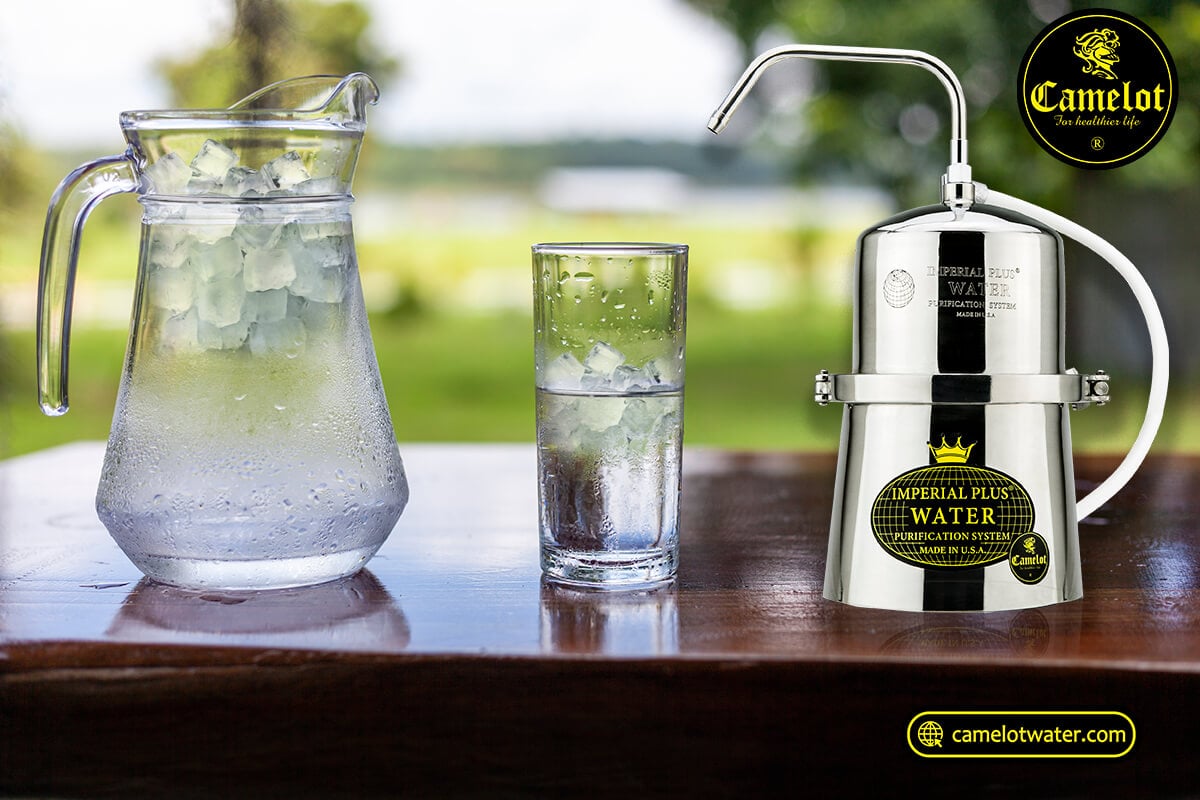
When you put filtered water in the freezer and take it out for consumption, you may notice the presence of small white particles or “chunks” in the water after it thaws. This phenomenon often causes concern among many consumers, who mistakenly believe it to be contamination. In reality, it is completely normal and harmless behavior of filtered water during freezing and thawing.
What happens is that as the water freezes, it first forms clear ice crystals and then “expels” anything that is not pure H₂O, namely the residues from dissolved mineral salts that have remained — mainly calcium, magnesium, and other natural trace elements. These are components that remain in the water as they need to be present.
As soon as the water starts to thaw, these trace elements become visible in the form of white microscopic flakes or pieces, resembling “cloudiness” or small flakes.
👉 In simple terms, pure water no longer contains “camouflaged” pollutants, and what you see is the result of natural sedimentation of these elements when the temperature changes. It is neither rust, nor mold, nor any chemical residue, but natural components that are found everywhere in nature.
On the contrary, the presence of these small “particles” is an indication that your water is indeed filtered: the organic and chemical load has been removed, leaving only its pure composition along with minerals — which are essential for our health.
In unfiltered water, turbidity or residues often come from soil, heavy metals, microorganisms, or traces of chlorine, which is not the case at all when using certified filters like those from Camelot®.
✅ What you can do:
Let the water sit at room temperature for a while before consumption, so that the trace elements can dissolve again and the clarity can return.
• Shake it gently, especially if you notice sediment at the bottom of the glass or bottle.
• You can also use a glass or stainless steel container for freezing, as such containers do not alter the stability of the water and help maintain its quality without visual residues.
• If you are going to use the water for ice production, let it “rest” for 1-2 hours at room temperature first, so that its composition stabilizes before cooling.