

Chemicals that cause hormonal disruptions were detected in bottled water.
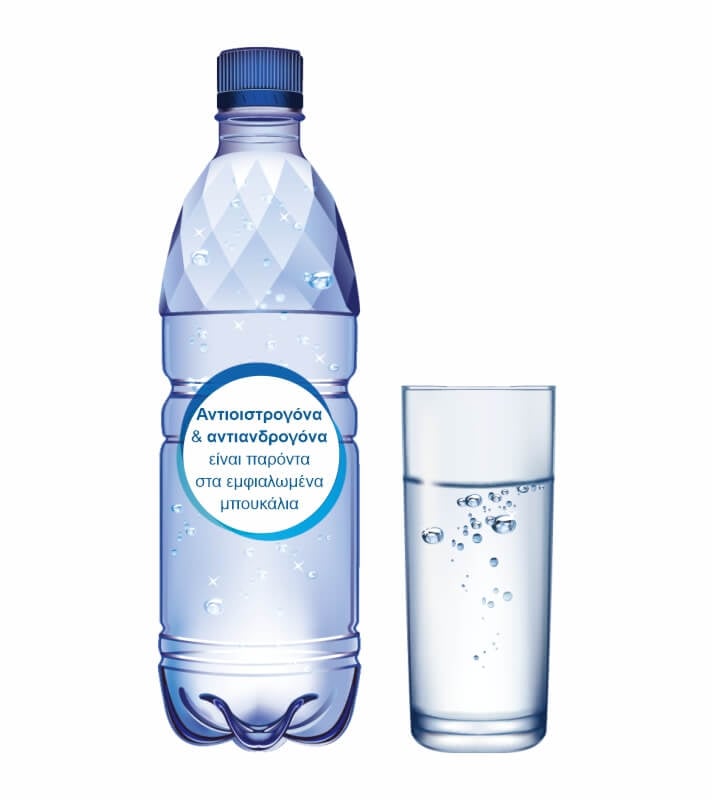
Chemicals cause hormonal disturbances and have even been found in bottled water. Many consider bottled water to be good. However, researchers recently discovered Endocrine Disrupting Chemicals (EDCs) in commercial bottled water.
This is reported by a new study published in the journal PLoS ONE..
Endocrine Disrupting Chemicals are artificial compounds that are widely used in many plastics. These compounds have been found to interfere with the hormonal systems of many organisms, particularly the reproductive system.
An earlier study conducted in 2010 on mice showed that adult women who had been prenatally exposed to chemical endocrine disruptors faced a higher risk of developing breast cancer.
It is well known that many types of EDCs are found in plastics used for food and water storage. More recently, an endocrine-disrupting chemical called bisphenol A was found in plastic used for making baby bottles.
Due to this study, the researchers wanted to determine whether EDCs were present in plastics used in commercially bottled water and, if so, in which of them.
The research led them to the conclusion that the majority of the bottled waters analyzed contained chemical endocrine disruptors, which could disrupt the hormonal system.
The research team conducted a review of data from previous studies, as well as an examination of 18 bottled water products to see if there is evidence of compounds that block estrogenic activity (anti-estrogenic), as well as activity that would prevent any biological effects (anti-androgens).
The results of the sample analysis showed that 13 bottles of bottled water had anti-estrogenic activity, while 16 of the bottles exhibited anti-androgenic action.
Further research with mass spectrometry simulations allowed researchers to find the chemical DEHF (diethylhexyl fumarate) present in the water. However, researchers say that this compound exhibits only anti-androgenic action, which means that there may be other chemical endocrine disruptors (EDCs) in the water that… are waiting to be discovered.. Therefore, the researchers not only identified chemicals that cause hormonal disruptions but also sound the alarm for the existence of others.
We have demonstrated that antiestrogens and antiandrogens are present in the majority of bottled water products. To identify the cause of the chemicals, we applied a new approach to correlate biology and high-resolution mass spectrometry data. “The structural determination led to isomers of maleic – fumaric diethyl ester as potential candidates,” say the researchers.
While the chemical analysis confirmed that diethylhexyl fumarate (DEHF) is the hypothetical steroid receptor antagonist, this compound was only weakly anti-estrogenic in biological assays. We therefore conclude that either we have overlooked a reactive compound, or that another maleic-fumaric isomer that we have not tested is causing the competitive action in the bottled water,” they add.
They emphasize that it is more likely for there to be a lost active compound in the water, as there is evidence supporting this particular version. Just like DEHF, there are other isomers that are anti-estrogens and anti-androgens.
Additionally, the maleic anhydrides are similar in structure to phthalate plasticizers, which are known anti-androgens. Therefore, we assume that the maleinyl – fumaric diester compounds may represent a new group of competitors for steroid receptors. This demonstrates that despite the apparent similarity to chemical endocrine disruptors, these substances have so far been overlooked by the scientific community,” they explain.
They emphasize, however, that there is currently no strong evidence suggesting that diethyl fumarate is harmful to humans and that further research is needed to determine whether this particular compound should be banned in plastics used in processing or containing specific foods. They hope, however, that the findings of their study will highlight the potential impact of chemical endocrine disruptors in food, beverages, and consumer products.
Source: medinova.gr