

🏛️️ Is the water in Athens really good as some may think, or does it need a filter?
Some consumers living in Attica have the impression that the water in the area is “good” compared to other regions in Greece and that no additional care or filtration is required. This impression is mainly based on the fact that EYDAP supplies Athens with water from natural sources (such as Mornos and Yliki) and that the water is considered “drinking.” However, how accurate is this conclusion? And what does “good” water actually mean?
✅ The positive: balanced mineral salts
The water in Athens has relatively low to moderate hardness, meaning it contains satisfactory levels of calcium and magnesium, which are useful for the functioning of the body, muscles, and the nervous system. Unlike areas with excessively hard water (which create scale and deposits in water heaters, faucets, and appliances), Athens has milder characteristics regarding mineral content.
However, this is only one dimension of the issue.
⚠️ What else does the water of Athens contain?
The fact that the water is drinkable means that it meets the minimum health standards of the state — but it does not mean that it is free from any potential contaminants. In practice, in the water network of Athens, there are:
1️⃣ Chlorine
It is used as a disinfectant for protection against microbes and pathogens. However, chlorine binds with organic compounds in water and forms disinfection by-products (THMs), which have carcinogenic effects according to the WHO.
2️⃣ Heavy metals
Lead, copper, nickel, and other metals do not come from sources, but from old water supply networks (municipal or apartment buildings). Continuous exposure to heavy metals burdens the nervous and reproductive system, especially in children and pregnant women.
3️⃣ Microplastics
Microplastics from cosmetics, detergents, plastic pipes, and atmospheric particles are now found in all urban networks worldwide. Studies have shown that up to 80% of drinking water samples worldwide contain microplastics, and Greece and Cyprus are no exception.
4️⃣ Nitrates and nitrites
They come from fertilizers used in agricultural and livestock activities. They can penetrate aquifers and reach the water. They are particularly dangerous for infants and small children, as they are associated with respiratory and hematological problems.
5️⃣ PFAS – “forever chemicals”
Perfluorinated compounds that do not break down easily are used in non-stick coatings, fabrics, and industrial applications. They have been linked to hormonal disorders, immunosuppression, and cancer. They are not monitored daily by water providers.
6️⃣ Drug residues
Antibiotics, contraceptives, painkillers, and other substances enter the environment through wastewater.
7️⃣ Organic industrial residues (VOCs)
Volatile organic compounds, derived from solvents, fuels, and detergents. They are potentially carcinogenic, affecting the liver and nervous system.
8️⃣ Asbestos fibers
In areas with old asbestos pipes, these fibers are transferred to the water with huge consequences for our health.
Regarding all of the above, there have been multiple reports and coverage from reputable Greek media, newspapers, and news sites, which have published data, allegations, and technical analyses confirming that the water supply network of Athens is not free from pollutant loads.
🛡️ So, does Athens water need a water filter;
The question is not only whether it is “drinkable,” but what its quality is over time. The fact that it does not have a strong smell or color does not mean that it does not contain dangerous chemical pollutants. Most harmful substances are colorless, odorless, and tasteless, but in the long term, they seriously affect our health.
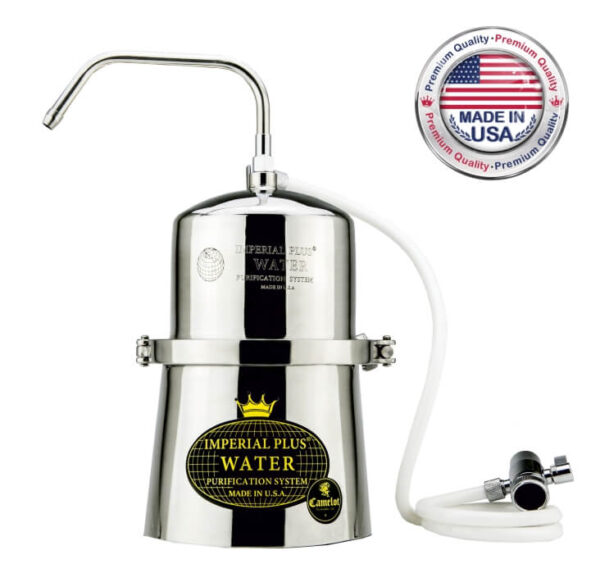
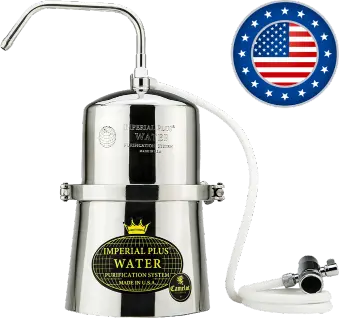
That’s why more and more consumers are choosing high-quality filters, such as the Imperial® Plus by Camelot®, which:
- Removes chlorine, pesticides, heavy metals, microplastics, PFAS, and VOCs and any other hazardous chemical pollutant
- Maintains useful mineral salts
- It has certified filtration stages, with compressed pharmaceutical-grade activated carbon of high density with membrane pores of 0.1 micron.
- Offers real protection for the whole family
- Filters for an entire year. And the last glass of water is as clean as the first glass.
🧠 Conclusion
The water in Athens is definitely better than in other areas in terms of mineral salts, but it still contains pollutants that come from processing, distribution, and daily environmental pollution. Drinking water that has only been tested for the basics every day is not enough.
Installing a quality filter like the Imperial® Plus is an act of responsibility and self-protection, providing higher quality and health-safe water for you and your loved ones.
📚 Sources:
- European Environment Agency – Water Quality
- World Health Organization – Chlorine in Drinking-water
- Environmental Working Group – PFAS Guide
- NPR – Microplastics in Tap Water
- EPA – Contaminants in Drinking Water
- WHO – Pharmaceuticals in Drinking Water