

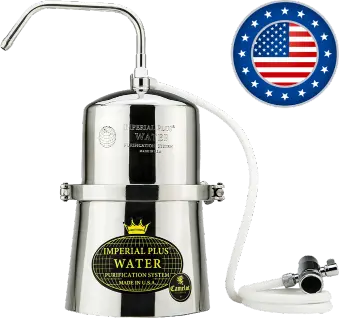
📏 What is the difference between 0.1 micron, 0.2 micron, 0.3 micron, and 0.4 micron? Why would someone choose the 0.1 micron filter instead of the 0.4 micron, which is cheaper?
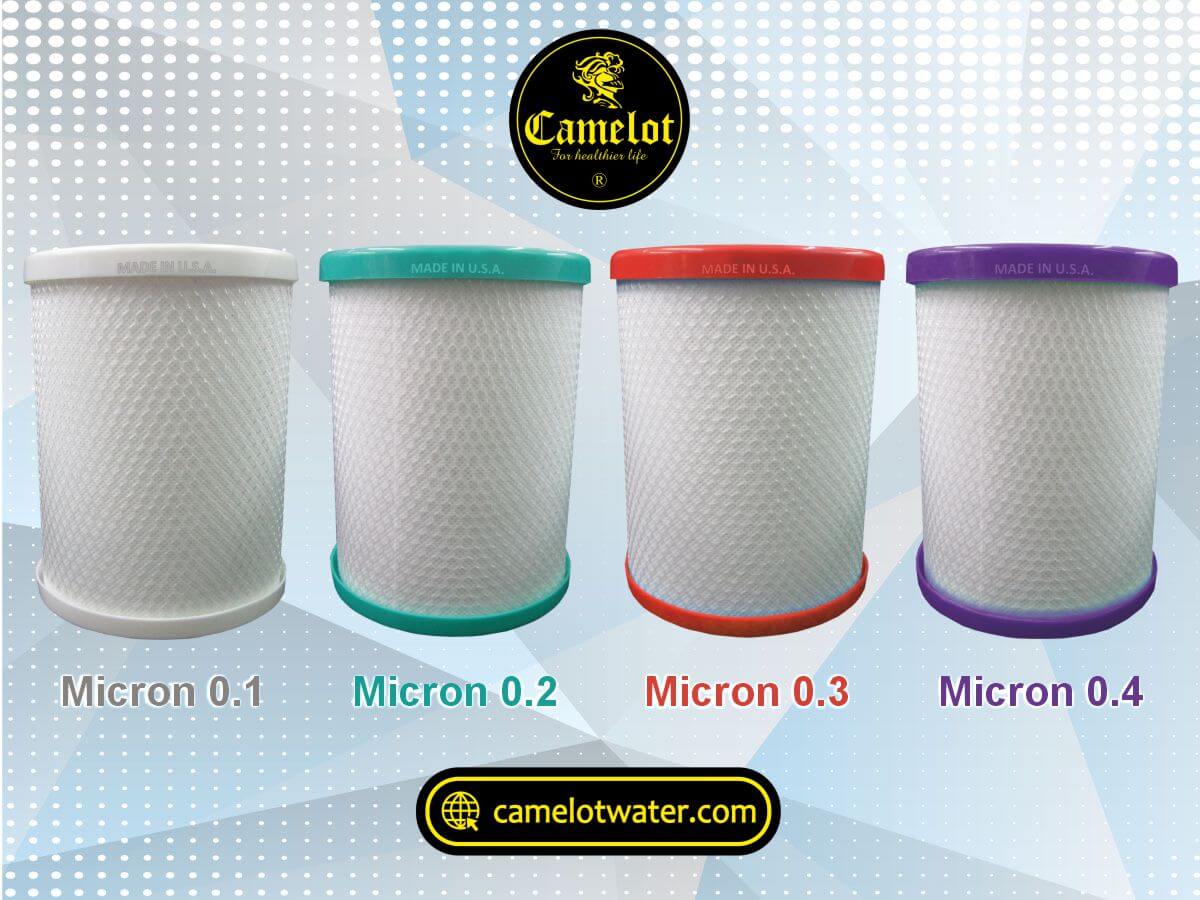

The quality of the water we consume daily has a direct impact on our health, which is why choosing the right water filter is extremely important. One of the key characteristics that determine the effectiveness of a filter is the size of its pores, which is measured in microns (micrometers).
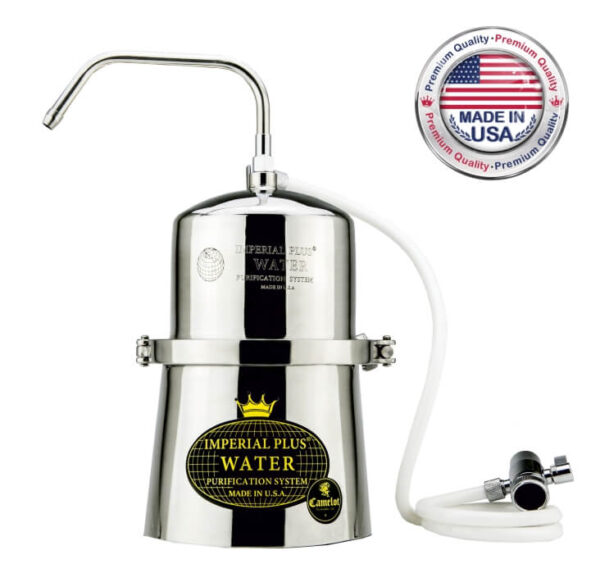
The options from Camelot® that one can choose are filters with pore sizes of 0.1, 0.2, 0.3, and 0.4 micron. Below, we will examine the differences between these sizes and explain why someone would prefer a 0.1 micron filter instead of a 0.4 micron, which is cheaper.
🔬 Diameter of pores and filtration efficiency
The diameter of the pores of a filter determines the size of particles it can remove from the water and the filtration capability based on the concentration of activated carbon.
Thus:
- A 0.1 micron filter removes anything larger than 0.1 micron and filters four times more than the 0.4 micron, etc.
- A 0.2 micron filter removes anything larger than 0.2 micron.
- A 0.3 micron filter removes anything larger than 0.3 micron.
- A 0.4 micron filter removes anything larger than 0.4 micron.
The filtration capacity of water increases significantly as the diameter of the pores decreases.
For example, the 0.1 micron filter is more effective in removing microscopic particles, bacteria, and viruses compared to larger filters.
🔁 Concentration and multiplicative effectiveness
The condensation of carbon and membranes in a 0.1 micron filter is:
- twice than in a 0.2 micron filter
- three times than in a 0.3 micron filter
- four times than in a 0.4 micron filter
This means that the 0.1 micron filter can filter:
- twice as many particles compared to 0.2
- three times more compared to 0.3
- four times more than 0.4
This multiplicative factor of purity is critical, especially in areas where water contains large amounts of microorganisms and pollutants.
💰 Cost and quality
As expected, the construction cost and the price of each filter vary depending on the diameter of the pores.
- The 0.1 micron filters are more expensive due to the more advanced technology
- Filters with a larger diameter such as 0.4 micron are more economical
Despite the slightly higher price, investing in a 0.1 micron filter is worth it, because for 365 days we have the perfect water quality for our health.
The protection of our health from harmful substances and pathogenic microorganisms is priceless, especially when it comes to daily water consumption.
🧫 Comparison of micron size and health effects
The smaller filters, such as those of 0.1 micron, are capable of removing a wider range of microbes and bacteria, including the most resistant and microscopic pathogens.
For example, bacteria such as E. coli, which have a diameter of about 0.2 micron and above, are removed more effectively with a 0.1 micron filter.
In contrast, a 0.4 micron filter can allow the passage of smaller bacteria and viruses, making it less suitable for areas with increased risk of water contamination.
💧 Imperial® Filters by Camelot®
Of course, all four filter options of Imperial® by Camelot® are excellent, but they have different prices due to their pore diameter and technology.
- All four options contain 850 grams of active pharmaceutical charcoal
- They are suitable for the processing of 15,000 liters of water
However, the effectiveness and purity of the water they provide varies, a fact that determines their final price.
✅ Conclusion
The selection of the appropriate water filter based on its pore size is crucial for ensuring cleaner and safer water.
- Filters with smaller pore diameter, such as 0.1 micron, offer:
- Superior filtration quality
- Greater protection from microorganisms and pollutants
The investment in such a filter is worth it due to the significant improvement in water quality and better protection of health.
The four options of Imperial® by Camelot® are all excellent and suitable for different needs and budgets, ensuring high quality and safety in the water we consume daily.
🛡️ Superiority of Camelot® filters over the competition
The Camelot® filters with pore sizes of 0.1–0.4 micron are superior compared to other filters on the market that have pore sizes of 0.5–5 micron. This superiority is due to:
- In the quality of activated charcoal
- In the amount of 850 grams (compared to 30–120 grams of other filters)
- In the advanced technology and membranes that they use
These features make the Camelot® filters a top choice for those seeking the best water quality for their health safety.