

🧼 Why Camelot® does not offer resin filters
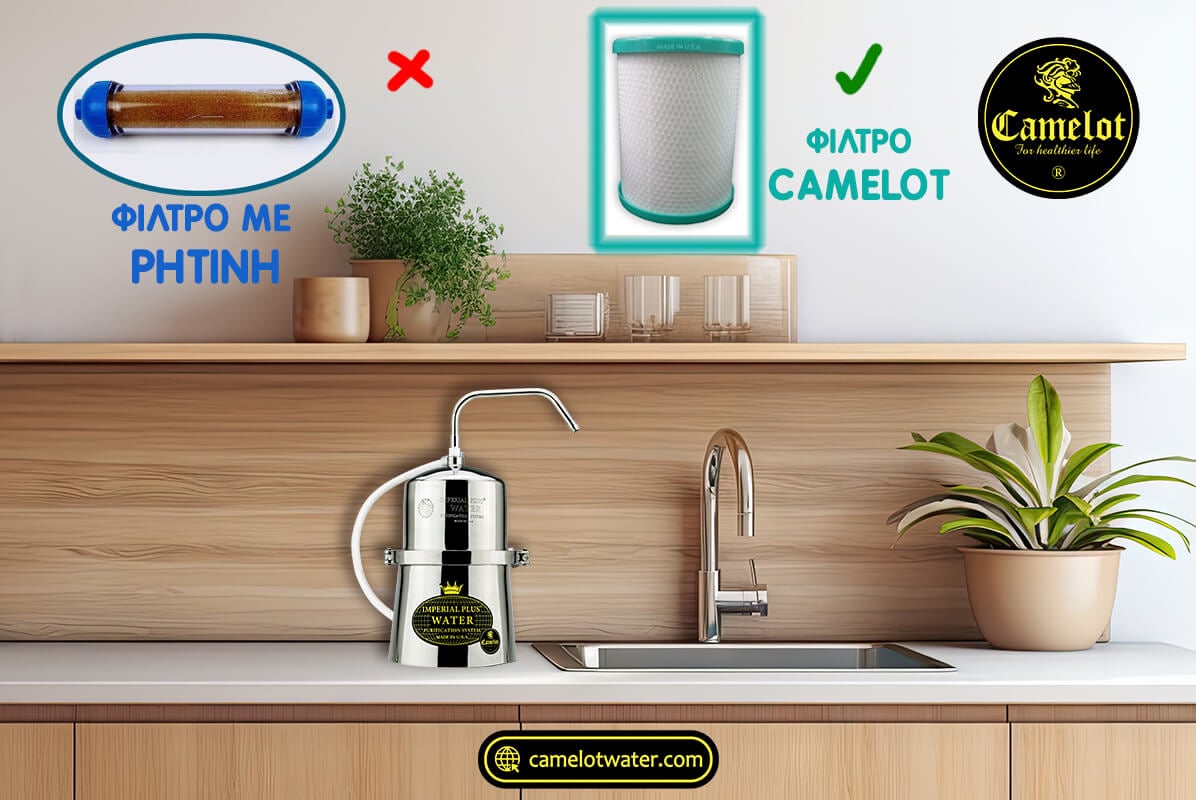
In the water filter market, filters with ion exchange resins are often used to reduce water hardness (removal of calcium and magnesium) or to remove specific metals such as iron, manganese, or nitrates. Although in some cases their use may provide solutions to local water problems, at Camelot® we consciously choose not to use resins in our filters for a number of documented reasons related to:
🧪 1. Chemical residues and the risk of sodium release
Resin filters operate through ion exchange – for example, they replace calcium and magnesium with sodium. This results in an increase in sodium levels in the filtered water, which is not ideal for people with hypertension, heart problems, or a sodium-restricted diet.
🔴 In some cases, the water produced from resin filters is not recommended for drinking without further treatment.
🧫 2. Sensitivity to microbial growth
Resins – especially when they remain stagnant or are not properly renewed – can become a breeding ground for microbial growth, as they provide a surface for bacteria to adhere to and moisture. This is extremely critical when it comes to drinking water filters, where hygiene is absolutely a priority.
🔄 3. Continuous need for regeneration or replacement
Ion exchange resins do not have a long lifespan without regeneration with salt or special chemicals. This process:
- is awkward and requires maintenance
- creates wastewater that ends up in the sewage system with a high load of salts or other pollutants
- it is not environmentally friendly
🔴 For home use, continuous regeneration with salt is not only annoying but also environmentally unfriendly.
🧴 4. They do not remove critical pollutants
Resin filters do not remove the most dangerous chemicals present in water, such as:
- chlorine and disinfection by-products (THMs)
- heavy metals (lead, arsenic, copper)
- pesticides
- microplastics
- pharmaceutical residues
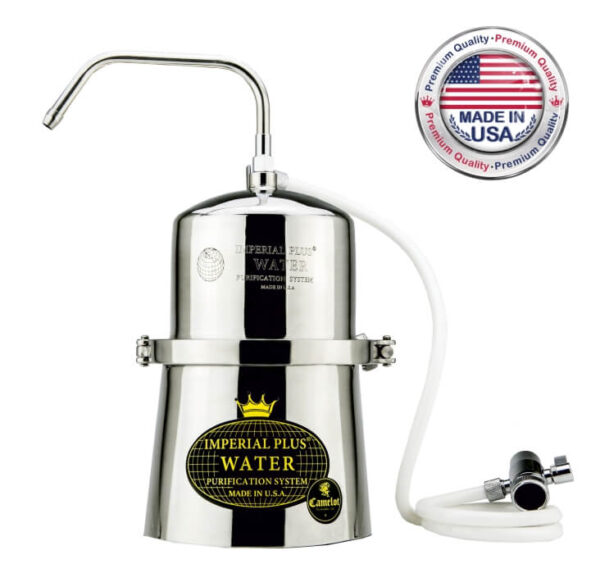
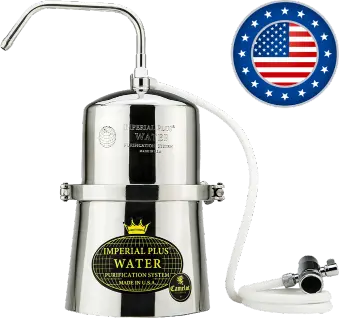
On the contrary, Camelot®’s Imperial® Plus uses an advanced combination of active pharmaceutical carbon and nanotechnology, certified by NSF, that covers over 80 different harmful substances – something that resin filters cannot achieve.
🌱 5. Low ecological efficiency
The use of salt and chemicals in the regeneration of resins, as well as the wastewater produced, have a negative environmental footprint, unlike the solutions from Camelot® that do not require such processes and operate without chemical additives or waste.
✅ What does Camelot® offer instead of resin filters?
- High-quality active pharmaceutical charcoal with certified performance
- Removal of chemicals and heavy metals, not just salts
- Long-lasting filters without regeneration
- Compatibility with drinking water even for vulnerable populations
🔴 If there is a need for hardness removal, Camelot® offers specialized solutions with filters that remove salts and reintroduce them, always in combination with water purification filters for consumption, to ensure complete health protection.
Conclusion: The choice to not use resins in the Camelot® filters is deliberate, scientifically substantiated, and respectful of health and the environment. We offer solutions that do not compromise on quality, lifespan, or water safety.