

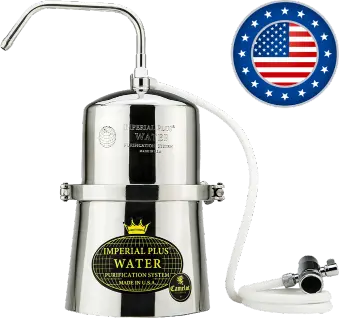
⚙️ What applies to reverse osmosis filters and why don’t you sell systems with this technology?
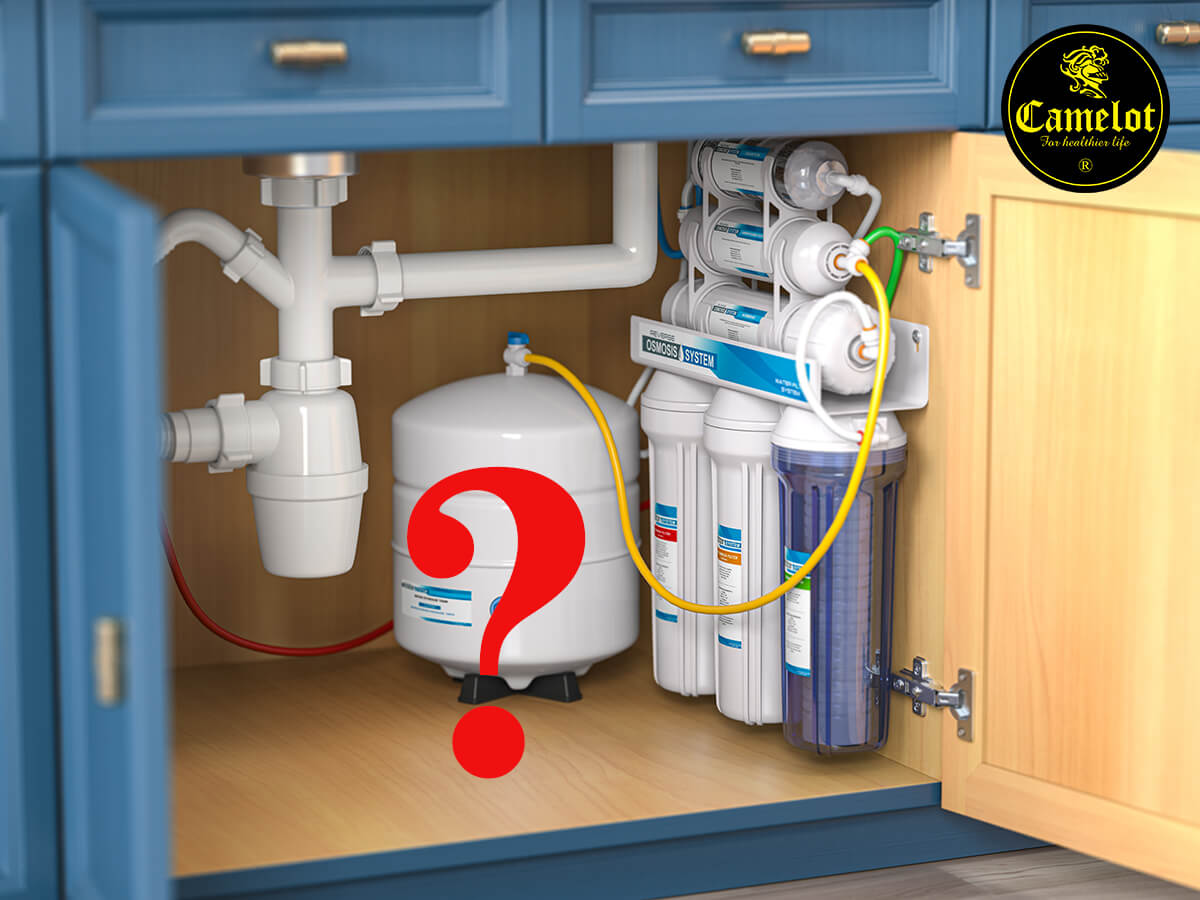
Reverse osmosis (RO) filters are a filtration technology used to remove various contaminants from water, such as dissolved salts, heavy metals, and microorganisms. This process involves the use of a semi-permeable membrane that allows water to pass through while retaining pollutants. These filters have significant disadvantages.
❌ Negative Aspects of Reverse Osmosis Filters
🧂 1. Removal of Essential Metallic Elements
Reverse osmosis filters remove not only harmful pollutants but also the essential mineral salts such as calcium and magnesium. This makes the water distilled and deionized, meaning it is unhealthy and non-potable. For example, the instructions on deionized water from the Super Market state that this water should not be consumed.
🩺 2. Health Impacts
Acidity and Removal of Mineral Salts from the Body: Water without mineral salts contains more hydrogen, which is acidic with a pH lower than 7. When consuming acidic substances, the body removes mineral salts from the teeth and bones to balance the acid. This can lead to calcium loss from the spine and teeth, with devastating health consequences.
Increase in Free Radicals: It has been shown that when body fluids become acidic from alkaline, the production of free radicals increases, raising the chances of cancer.
🦠 3. Effectiveness Against Microorganisms
Reverse osmosis filters do not effectively prevent bacteria and viruses. This can lead to contamination of the treated water, especially when the membrane becomes fouled and its performance decreases over time.
💧 4. Water Waste
RO systems waste a large amount of water. For every 1 liter of processed water, 3 to 5 liters of water are consumed and wasted, which is inefficient and not environmentally friendly.
☠️ 5. Detoxification
The crushing of microorganisms on the membranes of RO filters can cause the release of dangerous toxins into the treated water, with serious health implications, especially for children and adults.
⬇️ 6. Low Water Pressure
Reverse osmosis systems require high pressure to operate effectively. In areas with low water pressure, the use of pumps may be necessary, further increasing the cost and complexity of the installation.
🚱 7. Water Leak Risk
Reverse osmosis systems are usually installed under the kitchen counter. This increases the risk of water leakage, which can cause damage to the cabinet and kitchen floor, in addition to the effects it may have on the water quality.
🕒 8. Filtering Time
The reverse osmosis filtration process is slow. This means that these systems cannot produce large amounts of clean water in a short period of time, which can be problematic for families or businesses with high water demands.
👅 9. Αλλαγή Γεύσης του Νερού
The removal of all dissolved substances can affect the taste of the water. Many people find that water filtered by reverse osmosis has a flat or tasteless flavor, as the natural minerals that contribute to its taste are missing.
🚫 Why Camelot® Does Not Sell Reverse Osmosis Systems
🧬 1. Maintenance of Essential Metallic Elements
Camelot® emphasizes the preservation of natural metallic elements in water. The filters it uses maintain these elements, ensuring clean and healthy water.
🛡️ 2. Health Protection
Taking into account the effects of consuming demineralized water, Camelot® prefers technologies that do not remove essential minerals, keeping the health of consumers in focus.
🌿 3. Ecological Approach
The environmental sensitivity is a core policy of Camelot®. The large water waste associated with the use of RO systems is contrary to the principles of Camelot®, which prefers solutions that promote sustainability and reduce the waste of natural resources.
💸 4. Financial Efficiency
Camelot® aims to provide cost-effective solutions. Filters with lower maintenance costs and longer lifespan are more attractive and affordable for consumers.
🔧 5. Simplicity and Practicality
The Camelot® filtration systems are designed to be user-friendly and require minimal maintenance, ensuring customer satisfaction and consistency in water quality.
✅ Conclusion
Camelot®, with its commitment to quality, sustainability, and economic efficiency, has chosen not to offer RO systems, preferring technologies that retain essential minerals, are more environmentally friendly, and more cost-effective for consumers.
WARNING Water from reverse osmosis systems that produces distilled water is suitable for use in batteries, irons, for bathing, and for washing dishes, but not for drinking.