

💡 What applies to filters with ultraviolet radiation (UV lamp) and why don’t you have systems with this technology?
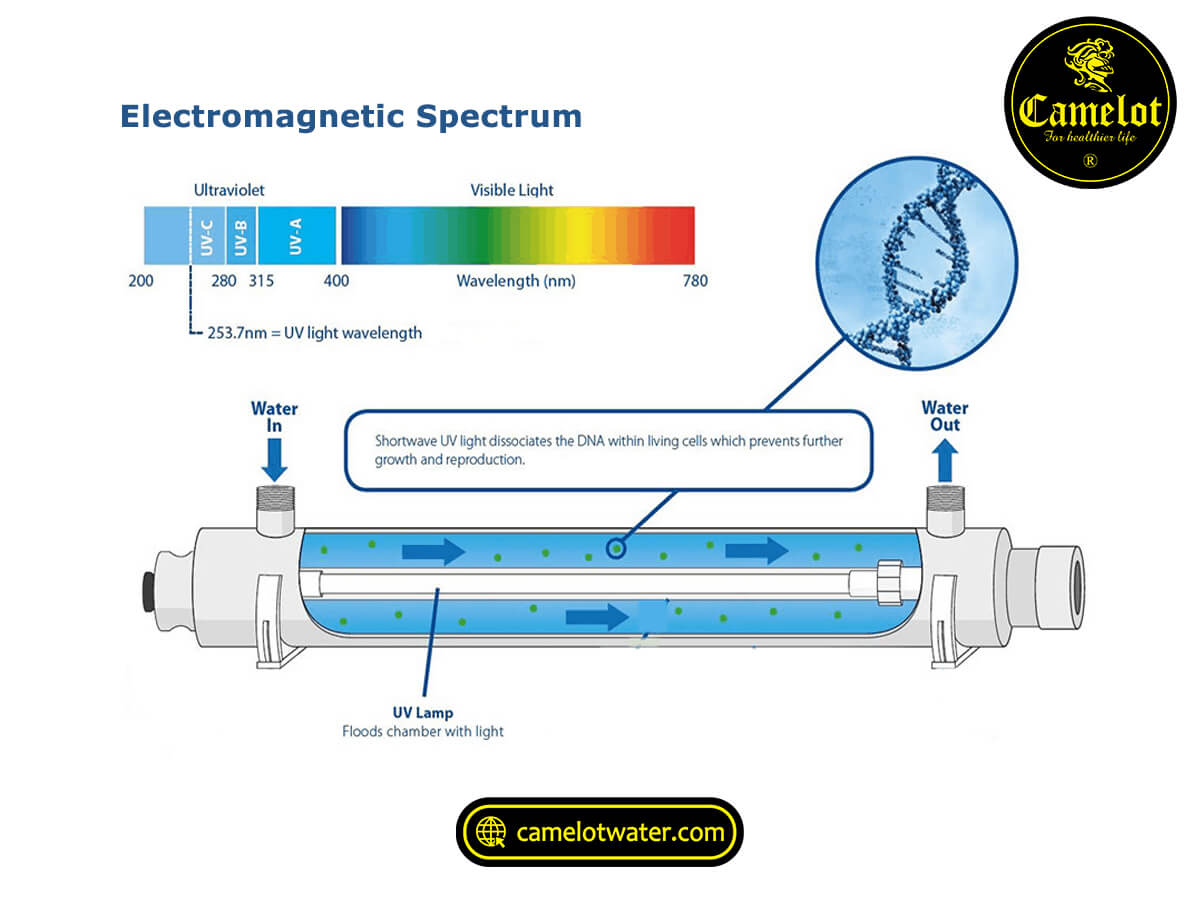
Water filters with ultraviolet radiation (UV lamp) are a technology used in some old technology filters for disinfecting water from pathogenic microorganisms. However, this particular method has several disadvantages that make it less efficient and reliable compared to other modern filtration technologies. At Camelot®, we do not use filters with ultraviolet radiation for a number of serious reasons that we will explain below.
🔍 How do ultraviolet filters work?
UV radiation filters work by emitting UV radiation into the water that passes through the system. UV radiation has the ability, when the lamp is new, to destroy the DNA of certain microorganisms, preventing them from reproducing. However, this process requires electricity for the UV lamp to operate, which increases the cost and complexity of the system.
⚠️ The disadvantages of ultraviolet filters
1️⃣ They require electricity to operate
The need for electricity means that UV filters cannot function in the event of a power outage, making them unreliable in emergency situations. Additionally, the continuous energy consumption increases the operating costs and maintenance of the system.
2️⃣ Risk of microorganism concealment
With ultraviolet radiation, substances in water can allow microbes to “hide” behind these substances, preventing the radiation from killing them. This property reduces the effectiveness of disinfection, allowing harmful microorganisms to escape.
3️⃣ Need for frequent bulb replacement
UV lamps must be replaced frequently, as their performance decreases over time. Typically, the lamps should be replaced every 2-3 months. Neglecting this maintenance leads to insufficient disinfection of the water, while frequent replacement of UV lamps increases costs.
4️⃣ Inability to eliminate cysts
Cysts, such as Cryptosporidium and Giardia, cannot be killed by ultraviolet radiation. Cysts can only be filtered with special filters, such as the Camelot® activated carbon filters with concentration from 0.1 to 0.4 micron.
5️⃣ Non-filtration of chemical pollutants
Ultraviolet radiation is used for the combat against microorganisms and not against chemical pollutants. This means that substances such as heavy metals, pesticides, chlorine, and other chemical pollutants are not removed from the water, resulting in serious health risks remaining in our water. In any case, the state is responsible for microorganisms, which is why it chlorinates the water to eliminate them.
6️⃣ Destruction of beneficial microorganisms
In addition to pathogenic microorganisms, ultraviolet radiation also kills the beneficial microorganisms that we need in our water. These can contribute to the natural biological balance of the water, and their loss can have negative effects on water quality and our health.
7️⃣ Inactive water
It has been proven that ultraviolet radiation can convert water into inactive. This means that the water can lose the energy it should have, negatively affecting its natural balance and vitality.
🔎 Why Camelot® does not use ultraviolet filters
At Camelot®, after long-term research, we prefer to use modern filtration technologies that provide comprehensive and reliable disinfection and purification of water. These technologies certifiably ensure that our water is clean, safe, and active, without relying on power supply or frequent maintenance. Furthermore, the complexity and additional costs associated with UV radiation make our systems more accessible and reliable for our consumers.
📌 In summary, UV filters may partially have the ability to disinfect water from microorganisms, but not always, and their multiple disadvantages make them less attractive compared to other modern filtration technologies. At Camelot®, we choose solutions that offer the best water quality with certified safety and reliability.
👨🔬 Kostas Athanasiou
Water specialist with over 35 years of experience (since 1985)
Certified by the WQA of the USA since 2008
Member of the National Environmental Health Association
👨🔧 Ηρακλής Αθανασίου
20+ χρόνια καθημερινής ενασχόλησης με την ποιότητα του νερού
WQA Certified Water Specialist από το 2008
Μέλος του National Environmental Health Association
🧩 The WQA is the largest global organization promoting quality, education, and certification in the field of filtered water.